
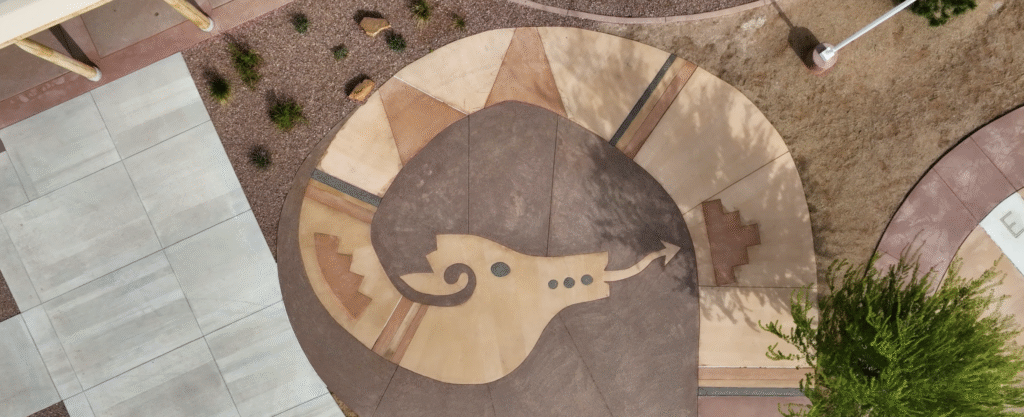
Avanyu: The Pueblo Water Serpent
Avanyu is the Tewa name of a water serpent deity in Pueblo culture. This deity is symbolic of rain, lightning, and bodies of water, including the Rio Grande. This connection to the life-giving element of water is particularly important in the desert environment of the Southwest. Avanyu can be seen in many examples of Pueblo art, as well as in the logos of Avanyu Plaza and the Indian Pueblo Cultural Center, honoring the water serpent’s role in the lives of the Pueblo people.
Meaning & Symbolism
- Guardian of water & bringer of rain: Avanyu embodies rivers, springs, clouds, and storms—the forces that sustain life in arid homelands.
- Flow & lightning: The serpent’s sinuous body echoes the movement of water; zigzags and tongues can allude to lightning.
- Protection & respect: As a protector figure, Avanyu reminds communities to honor, conserve, and steward water.
How Avanyu Is Depicted
- Horned or plumed serpent with a curving, often circular or undulating body.
- Water and storm motifs—waves, clouds, and lightning—may be integrated into the design.
- Materials and media: Seen in rock art, murals, pottery, and contemporary works across Pueblo communities.
Deep Roots
Avanyu appears in ancestral art traditions dating back centuries and continues as a living motif in Pueblo creativity today, including Santa Clara blackware and other regional styles.
Respect & Cultural Protocols
Avanyu is part of living Pueblo cultures. Meanings and protocols vary by community. When using or referencing this symbol—especially in design, merchandise, or events—seek guidance, permissions, and attributions consistent with Pueblo preferences. For in-depth cultural learning, plan a visit to the Indian Pueblo Cultural Center across the street.
Why It Inspires Avanyu Plaza
Our plaza takes its name from this revered water guardian to honor the 19 Pueblos of New Mexico and to underscore our shared responsibility to care for people, place, and water—today and for future generations.
Learn More
- Pablita Velarde, Schaafsma, P., Fields, V. M., & Zamudio-Taylor, V. Avanyu, the Tewa Two-Horned Water Serpent. Mesa Prieta Petroglyphs.